
Charles Bisset's Zissa Scar Story
Charles Bisset is a professional fighter, a cowboy, a bronc rider, and an actor. He has scars on his face, his collarbone, his hip, and his femur. Each one is a different story. He can tell you all of them.
The one on his femur is the one that almost ended everything.
He was 15. Driving home with his mother. They hit black ice, the car went sideways, just missed a vehicle coming the other way, and flipped. Charles wasn't wearing a seatbelt. He was ejected through the window — thirty feet, over a bank.
He woke up on the other side of a tree. The tree had stopped him from getting crushed. The car was sandwiched against it. A tire was still spinning next to his head.
His mother was inside, her arm shattered, her wrist shattered. Charles told her he was going to get her out. He tried to stand. His femur was split in half and was hanging off to the side. The bones hit each other. He fell down.
"I was like, dang, I can't get you out."
They were both covered in gasoline. The car started to spark. They said their goodbyes.
Then a couple of farmers came running.
Charles bled internally for hours. He developed three blood clots in his lungs. The doctors told him he probably wouldn't fight again.
He had grown up off-grid on the side of a mountain — no power, no electricity. After the accident, his family had to move into town for six months while he healed. He hated town. At 16, he got his dad's permission to leave. He started cowboying.
And he ignored calls to soften his lifestyle. He came back, kept fighting, and became a four-time world champion Muay Thai kickboxer.
"I didn't listen to the naysayers."
The other scars came later, and each one has its own lesson.
The one on his face is from his WBC title fight. He was cut down to the skull. Ten stitches.
"That one is: don't back up, because you're going to get hit. But I also wear it really proudly for my fight career. I have a lot of pride in that."
The one on his collarbone is from a bronc that came off the wrong way at practice. The bone was almost coming through the skin. He drove three hours to the hospital and had a plate put in.
"That one is just being a cowboy. It's not if you get hurt, it's when you get hurt — and if you're going to come back. I got on a bronc 11 weeks after that and took second in a rodeo."
The one on his femur is the one that started everything.
"That one is: don't give up. Because they said I'd never come back and fight. And I came back."
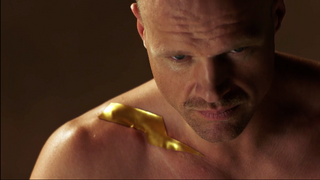
When we sent Charles a Zissa sheet, he held it up.
"With Zissa, I'm able to wear my scars and heal them and protect them while living my lifestyle — the rigorous training. I love my scars. They look pretty rank, and I wear them proudly. With Zissa, I wear my scars like a badge of honor."
Then a beat.
"For people who aren't as confident yet, you can hide it with a little bit of style — or feel comfortable until you're at that stage where you feel more confident in your scars. Zissa lets me wear my scar while styling my scar."
Charles' Advice for Someone Earlier in the Journey
"Fighting, bronc riding, near-death experience — the way I tie them all together is all gas, no brakes. Just living life to the fullest. What scars mean to me is that you lived. And just keep on living."
Zissa Scar Stories is an ongoing series featuring people who are reshaping their relationship with their scars. If you'd like to share yours, reach out.

